
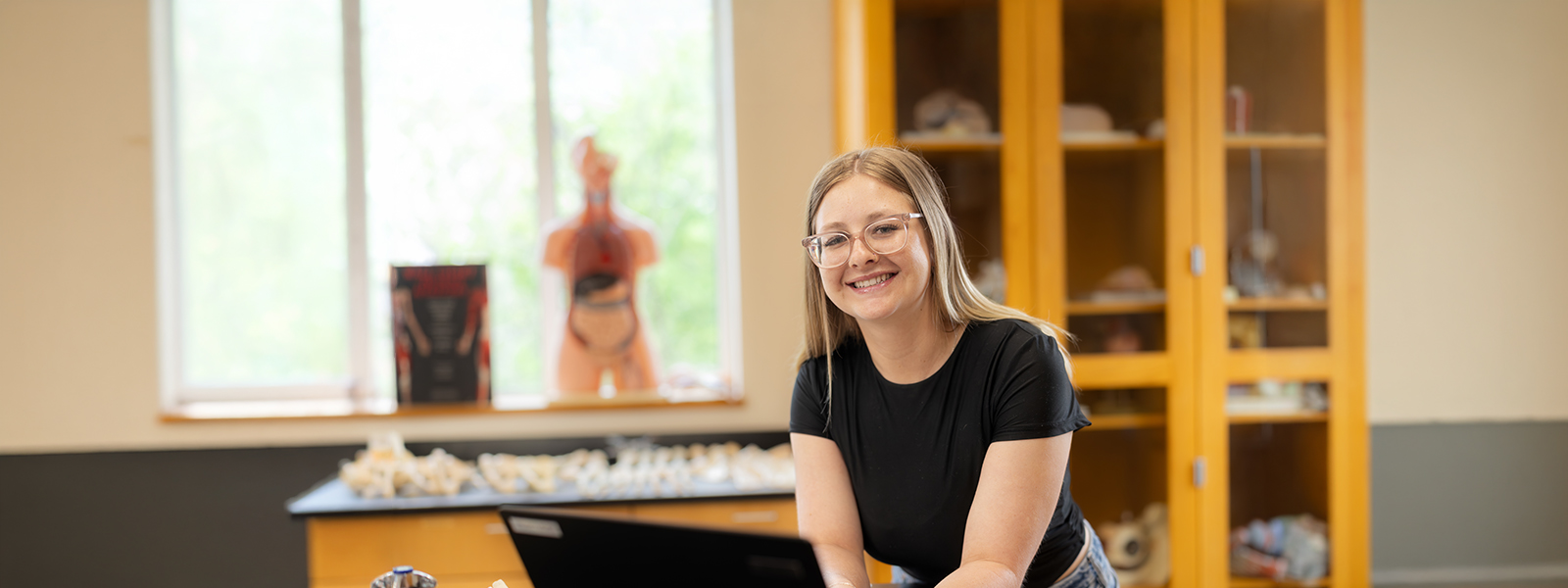
How to become a biomedical researcher with a master's degree
A master's degree gives students a direct way into that work: running experiments, analyzing data, and contributing to research that's already underway. The skills built here, technical, analytical, and communication-focused, are the same ones research employers actively look for.
Chatham University's Master of Arts in Biomedical Studies is built around that kind of early, hands-on involvement. Students pair coursework with guided faculty research from the start, working alongside mentors on real projects rather than waiting until later in their careers to get lab experience.
What does a biomedical researcher do?
Biomedical researchers study how the human body works and how disease develops, using laboratory experiments, data analysis, and scientific investigation to improve health outcomes. Biomedical scientists apply these skills across a range of settings, including:
- Universities and academic research centers
- Hospitals and clinical research facilities
- Biotechnology and pharmaceutical companies
- Government and nonprofit research organizations
A master's degree can prepare graduates for many of these roles, especially positions on research teams and in industry laboratories where the work is collaborative rather than independently led. Leading an independent research program typically calls for a doctorate, but plenty of meaningful, hands-on research happens well before that stage.
Steps to become a biomedical researcher with a master's degree
Becoming a biomedical researcher follows a fairly clear progression, one that starts well before graduate school and builds steadily through hands-on experience. Here's what that path typically looks like:
- Earn a science bachelor's degree: Biology, chemistry, biochemistry, or a related field with laboratory coursework provides the foundation. Lab experience during undergraduate study signals readiness for graduate work, and even a single semester in a research lab can shape which programs feel like the right fit later on.
- Gain early research experience: Joining a faculty lab, completing an internship, or assisting on a research project builds skills and clarifies interests before applying to master's programs. These early experiences also give students something concrete to point to when applications ask about hands-on background.
- Complete a master's degree: A thesis or research-focused master's degree in biomedical studies develops the hands-on skills that employers look for. Graduates with direct research experience often stand out in hiring, particularly when that experience includes a completed project they can speak to in interviews.
- Build technical and analytical skills: Data analysis, laboratory techniques, and scientific communication are central to most research roles. These skills accumulate through coursework and project work and tend to compound, so a student who starts strong in one area often picks up related skills more quickly.
- Apply for research roles or consider further study: Research associate and laboratory specialist positions are accessible to master's graduates. Some use the degree as a step toward a Ph.D. or health professional program later, while others build long careers directly in research without ever returning to school.
Each step builds on the last, and the strongest candidates tend to be the ones who treat research experience as continuous, not something that starts only in graduate school. Real lab work, even in small amounts, teaches skills that coursework alone can't.
What students learn in a biomedical master's program
Biomedical science graduate programs blend advanced coursework with hands-on research, typically combining core science courses with lab-based or thesis work. Thesis-track programs require students to complete an original research project under faculty mentorship, while non-thesis tracks may emphasize coursework or professional preparation.
Core areas of study often include:
- Molecular and cell biology: How cells function, communicate, and respond to disease at the molecular level, forming the foundation for understanding conditions from cancer to autoimmune disorders.
- Physiology: How organ systems work together to maintain health, and what happens when that balance breaks down.
- Biochemistry: The chemical processes that drive biological activity, from how the body metabolizes nutrients to how drugs interact with cells.
- Research methods: Designing experiments, collecting data, and interpreting results in ways that hold up to scientific and regulatory scrutiny.
- Data analysis: Statistical tools and software used to draw conclusions from research and translate findings into usable insights.
- Scientific communication: Writing and presenting research findings for professional and public audiences, a skill that matters as much in industry as it does in academia.
Thesis or research tracks build the strongest preparation for research-focused careers. Graduates who complete guided research projects enter the workforce with direct experience in study design, data collection, and scientific writing.
Career paths with a master's in biomedical studies
A master's degree prepares graduates for a range of roles across research, clinical, and industry settings. Entry points vary by employer, but most involve contributing to research teams or supporting scientific operations.
Common roles include:
- Research associate: Conducting experiments, collecting data, and supporting principal investigators in academic or industry labs, often as a first step toward more senior research positions.
- Laboratory specialist: Managing lab operations, maintaining equipment, and ensuring quality control, work that keeps entire research teams running smoothly.
- Clinical research coordinator: Overseeing clinical trials, recruiting participants, and managing regulatory compliance, bridging the gap between research protocols and real patient care.
- Biotechnology or pharmaceutical roles: Working on product development, quality assurance, or regulatory submissions, areas where scientific rigor directly affects patient safety.
- Healthcare data analyst: Applying analytical skills to patient outcomes, public health data, or clinical research, turning raw numbers into decisions that shape care.
Career progression often moves from contributor roles toward senior scientist, project lead, or management positions. Some graduates use the master's as a foundation for doctoral study or professional programs, such as physician assistant studies, preparing for further work in medicine, dentistry, or veterinary science.
How Chatham University's Master of Arts in Biomedical Studies builds research experience
Chatham University's Master of Arts in Biomedical Studies (MABS) connects classroom learning to direct research experience. Students work alongside faculty on guided research projects in areas such as human physiology, microbiology, and computational modeling.
The program also includes access to a state-of-the-art cadaver lab, where students build hands-on anatomy and dissection skills. Faculty mentorship is central to the experience: students identify a faculty member whose research interests align with theirs and then work closely with them throughout the program.
Pittsburgh's standing as a major health and science hub means hospitals, research institutions, and the professional networks around them are close by. Education and health services form the region's largest source of jobs, keeping working labs and clinical employers within reach.
The one-year format lets students move quickly into research roles or continue toward doctoral or professional programs.
Take the next step toward a biomedical research career at Chatham University
A master's degree can be the step that moves you from studying biomedical science to actively practicing it. If you're ready to build the research skills, mentorship, and lab experience behind that shift, Chatham's MABS program is designed to help you get there.
If you're ready to explore what that next step could look like, request information about Chatham's Master of Arts in Biomedical Studies program and see how it can fit into your path forward.
FAQs about biomedical research careers
Do you need a PhD to work in biomedical research?
No. Many research and laboratory roles are open to master's graduates. A Ph.D. is typically required for positions that involve leading independent research programs.
How long does a biomedical master's degree take?
Most programs take one to two years of full-time study. Some schools offer accelerated options that shorten the timeline. The Master of Biomedical Studies at Chatham University is a one-year program.
Is a thesis or non-thesis track better for research careers?
A thesis or research-focused track builds stronger hands-on research skills. Graduates with direct research experience often have an advantage when applying for research-focused roles.